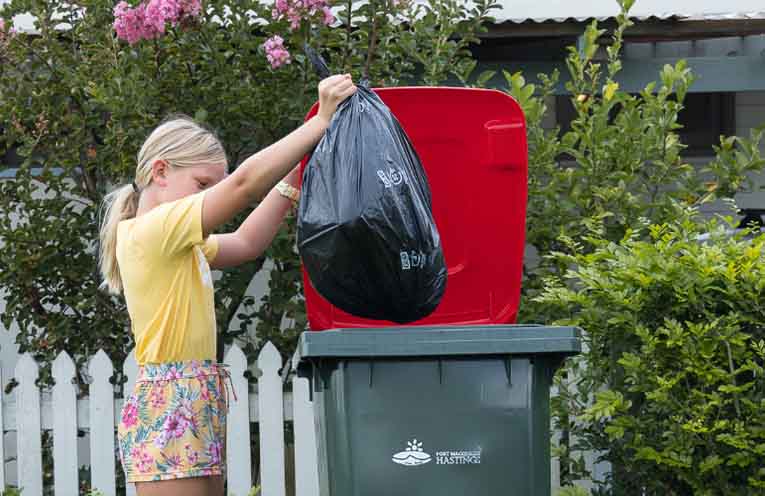
RESULTS from the 2025 MidWaste Kerbside Waste Audit have revealed that households in the Port Macquarie Hastings local government area are outperforming state averages for waste management.
Local households achieved a 75 percent landfill diversion rate, with most of the household waste being successfully kept out of landfill through recycling and the Food Organics and Garden Organics (FOGO) service.
“This is a win for our community,” Port Macquarie Hastings Council (PMHC) Group Manager for Utilities Planning and Design Cameron Hawkins said.
“We want to thank our residents for their ongoing efforts and commitment to recycling and waste reduction.
“Simple, everyday actions can have a powerful impact and these outstanding results are proof of that.
“We all have a vital role to play in reducing waste and protecting our environment.”
Key results from the report include:
● 98 percent of households present a general waste bin, with 83 percent presenting both recycling and FOGO bins.
● Recycling contamination remains relatively low, at nine percent of the recycling stream, while FOGO contamination is just one percent.
● The overall recovery rate of recyclable materials through the kerbside system sits at 91 percent.
● 45 percent of all household food waste is being correctly placed in the FOGO bin. This is significantly higher than the NSW average for similar FOGO systems (29 percent) and reflects steady improvement following the introduction of FOGO. Garden organics recovery is particularly strong, with 99 percent captured through the FOGO service.
The results also highlighted opportunities to improve recycling and waste disposal habits and increase landfill diversion rate to 85 percent.
The report noted that over 30 percent of general waste consists of food, either loose or still in its packaging, that could be removed from its container and placed in the FOGO bin.
Redirecting this material has the potential to reduce general waste by almost a third.
Recyclable materials, particularly paper, cardboard and plastic containers that belong in the yellow bin still account for about 10 percent of general waste collected.
Hazardous waste like vapes, batteries, e-waste and household chemicals, which can be dropped off for free at Council’s waste facilities, also continue to appear in household red bins.