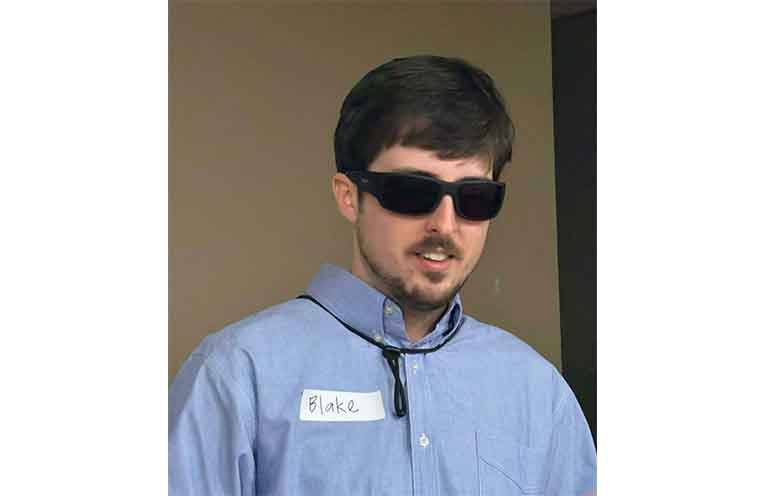
BLAKE Edge, 28, moved to Port Macquarie in 2020 to be closer to family.
He sees that as a positive, but has conflicted feelings about life here as a young person with a disability.
Blake lives with retinitis pigmentosa, a genetic eye condition that leaves him with 10 degrees of vision, level two autism, and functional neurological disorder.
Blake told News Of The Area, “Younger people leave here for greener pastures as it just isn’t affordable and there isn’t enough to do.
“I’d like to see the creation of more places that are accessible, free, and hold an expectation of meeting strangers.
“These are known as third spaces.
“As children we went to the park to do that, but there is nowhere for adults; I facilitate board game groups, but I feel like we could do better than that.
“As a society, recreational needs are important, but recent infrastructure developments don’t seem to take those into account, particularly in relation to disabled people.
“My hope is to be able to do something worthwhile despite my disabilities.”
Third spaces are social environments distinct from home-first, and work or school-second.
They provide essential, neutral, and accessible locations for community, relaxation, and conversation.
These spaces, such as cafes and libraries, are designed to encourage belonging and improve mental health.
Legally blind since he was 21-years-old, a major factor in Blake’s quest for independence is the lack of tactile ground surface indicators.
These are the raised bumps found in areas such as kerbs and traffic crossings that advise vision impaired people of upcoming obstacles and ground changes.
Blake is a member of the Enable Reference Group which provides feedback to Port Macquarie-Hastings Council on accessibility issues.
By Rachael THORPE