Share via:

FEW have experienced the game of football at more varied levels than Mark Trenter.
From taking the field against Italian and AC Milan great Franco Baresi to coaching park football in Park Macquarie, the tough-tackling former centre forward and Dunbogan resident has seen it all.
Raised in the valleys of South Wales, Trenter joined English second division club West Bromwich Albion in 1974 as an apprentice.
He remembers the environment being “quite ruthless”.
“You would kick people to get into the team,” he told NOTA.
“Every session you had to be gladiator-minded.
“You had to have the skill in the first instance, but you needed the balls to go along with it.
“It was competition, competition, competition.
“There were 15 apprentice professionals who were signed each season, and only two on average would become a professional.”
Trenter did just that, signing a professional contract with Albion in 1976.
At the time the squad was led by player-coach Johnny Giles, a former Leeds United midfielder hailed as one of the greatest Irish players of all time.
Trenter said working alongside Giles was an “absolute privilege and honour”.
In four years at Albion, Trenter experienced both the euphoria of goalscoring and the despair of losing his spot due to player arrivals and serious injuries.
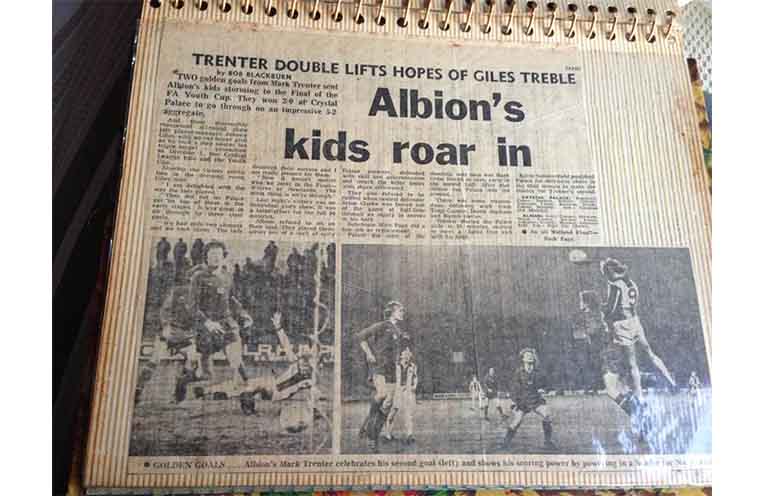
“At that time I had scored in just about every round of the FA Youth Cup,” he said.
“I was there then for another two seasons as a pro before I got some horrible injuries.”
One highlight from the period was playing for Wales under 19s against Italy and being marked by the legendary Baresi.
“That was an experience and to be fair I didn’t get much of a kick.”
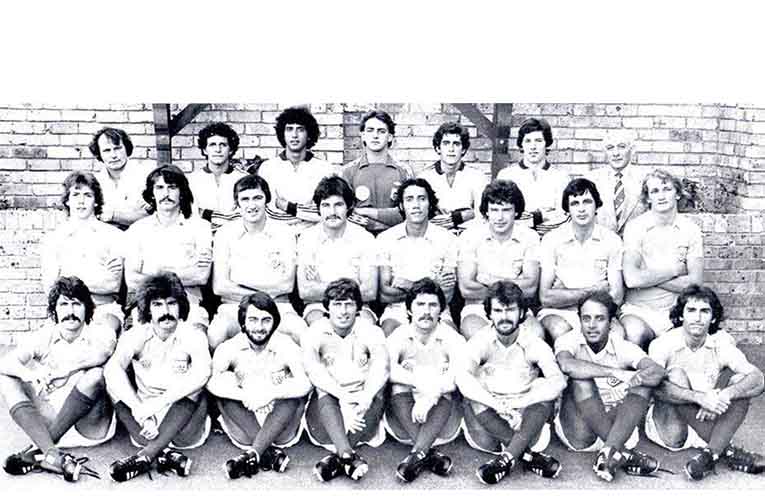
Despite promising form, Trenter said the arrival of future England forward Cyrille Regis in 1977 pushed him down the pecking order at Albion, before eventually accepting a move to National Soccer League (NSL) club Sydney City Hakoah in 1978 at the age of 18.
“I scored a few goals, managed to recover from an ankle reconstruction and a cartilage operation, and the club said they wanted me to stay,” Trenter said.
“They said they would bring my parents over here and give me citizenship, so I said ‘bring it on’.
“I managed to play in three grand finals with Hakoah and had a short stint with Newcastle KB United, which is now the Newcastle Jets.”
Five years later, at just 23, Trenter was forced to retire from playing due to ongoing injury concerns.
Seeking job security he moved into the transport sector, developing a successful career in business before returning to the game years later as a coach.
A management role with Port United FC followed, before a long-term coaching stint at Cooks Hill United FC in Newcastle, alongside top administrative roles at football bodies including Northern NSW Football.
In 2026, now back living on the Mid North Coast, Trenter is volunteering his knowledge as a committee member with the Camden Haven Redbacks.
“It’s a great community football club and I am trying to help them move forward.
“I hope I can assist with games and give advice to coaches where needed.”
Impressed with the standard on the Mid North Coast, Trenter believes talent identification in regional and rural areas remains a major challenge.
“The standard in the country is really good, they just don’t get seen.”
He also calls for more equitable player pathways, a greater focus on the basics of youth development, and encourages greater influence from ex-professionals on the direction of the game in Australia.
“The tall poppy syndrome in Australia is shameful really,” he said.
“There are not enough ex-players in the system.“
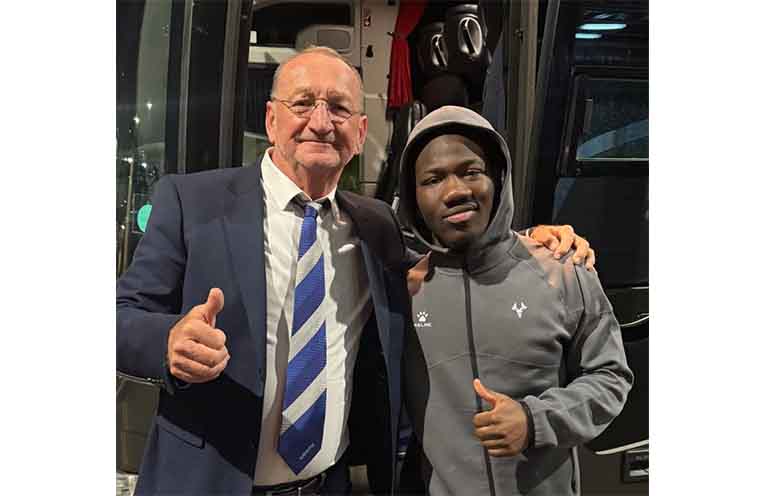
Trenter recently returned from a trip to England for the 50-year reunion of West Bromwich Albion’s 1976 squad, where he rubbed shoulders with his old coach Johnny Giles, ex-team mates and current Socceroos star Nestory Irankunda.
By Douglas CONNOR
You can help your local paper.
Make a small once-off, or (if you can) a regular donation.
We are an independent family owned business and our newspapers are free to collect and our news stories are free online.
Help support us into the future.
Share via: