WHILE plenty of anglers regularly head offshore in search of snapper, kingfish and other prized species, not everyone may realise there is a purpose-built artificial reef sitting off the Port Macquarie coastline.
Known as the Port Macquarie Offshore Artificial Reef (OAR), the structure was deployed in February 2016 as part of the NSW Government’s offshore artificial reef program. It’s designed to create additional marine habitat and improve recreational fishing opportunities along the NSW coast.
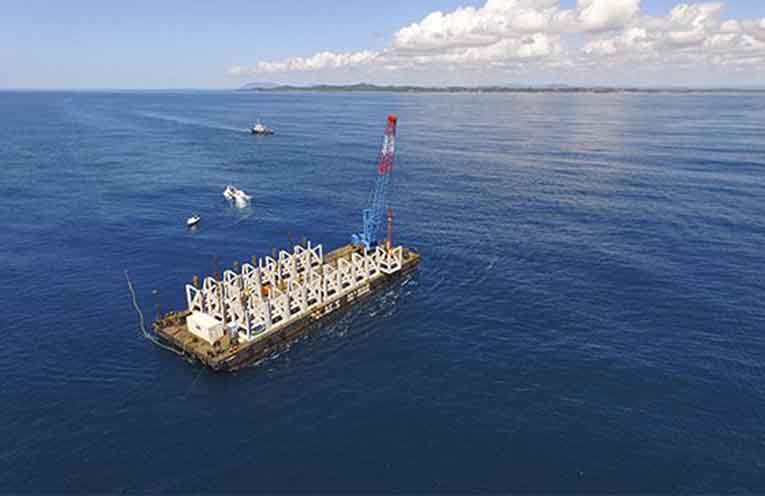
Located approximately 6.3 kilometres north-east of the Port Macquarie river entrance, the reef sits in around 46 metres of water and comprises 20 purpose-built concrete modules arranged in clusters across the seabed.
Each module stands approximately 6.5 metres tall, with five incorporating additional steel towers that extend their height to around nine metres.
Together, the structures provide an impressive 1600 cubic metres of artificial reef habitat.
But the project was about much more than simply dropping concrete structures onto the ocean floor.
The Port Macquarie reef was first announced in 2014 as a $900,000 project, with funding coming from the NSW Recreational Fishing Trust.
This is particularly interesting because the trust is funded through recreational fishing licence fees, meaning money collected from NSW recreational anglers was reinvested into creating new fishing opportunities.
The project followed the successful installation of offshore artificial reefs at Sydney’s South Head in 2011 and Shoalhaven Heads in 2015, with Port Macquarie becoming the third offshore artificial reef installed under the NSW program at the time.
The reef modules were purpose-built in Newcastle before being transported more than 250 kilometres by barge to their offshore destination. Each module weighed approximately 23 tonnes and was carefully positioned on the seabed to maximise the overall reef volume.
The design is intended to do more than provide a hard surface for marine growth. The structures alter water movement, creating eddies and upwellings that help concentrate plankton and baitfish while providing shelter and habitat for a variety of marine species.
Reported species that have been caught on the reef include kingfish, samson fish, amberjack, trevally, pearl perch, juvenile bar cod, snapper, mulloway and morwong.
For those wanting to give the reef a try, drifting baits or lures along the edges of the modules is recommended. Anchoring directly on top of the structures is discouraged, as it can damage the fishing experience for other users and significantly increase the risk of losing an anchor around the vertical towers.
Importantly, the reef is also part of an ongoing scientific monitoring program managed by NSW Department of Primary Industries and Regional Development (DPIRD).
Monitoring uses baited remote underwater video, remotely operated underwater vehicles and sonar technology to assess fish populations, marine life, structural condition and any accumulated fishing debris.
Artificial reefs are designed to last for many decades, providing additional habitat and recreational fishing opportunities for generations of anglers.
With so much investment having gone into the project, it is worth reminding local anglers that this offshore fishing resource is right on our doorstep.
Whether you are chasing a kingfish on a jig, drifting for pearl perch or sounding around for a good snapper, it’s worth giving the Port Macquarie Offshore Artificial Reef a go.
By Kate SHELTON