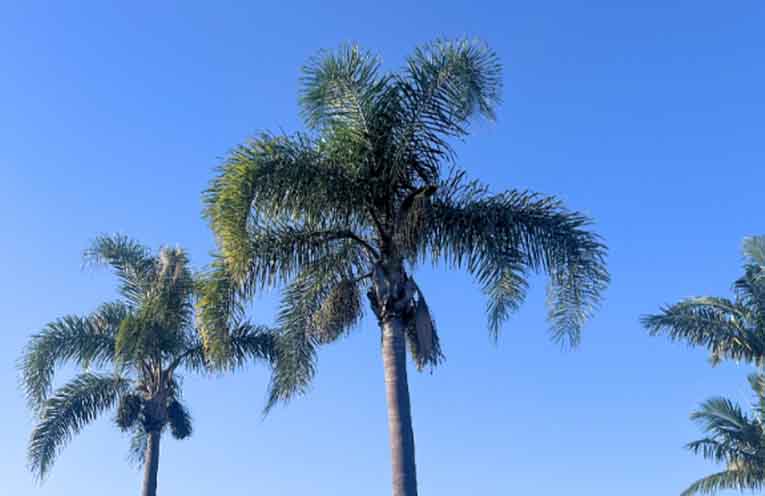
COCOS Palms will be gradually removed from selected streets, parks and reserves in coming months, as part of a long-term council program to protect native wildlife and ecosystems.
Classified as an environmental weed, Cocos Palms (Syagrus romanzoffiana) are known to negatively impact flying-foxes – a species that plays a critical role in pollinating and dispersing the seeds of native trees, including those that support koala habitat.
Port Macquarie Hastings Council (PMHC) Ecologist Byron Reynolds said the issue is part of a broader environmental cycle.
“Flying foxes are essential for maintaining healthy forests,” Mr Reynolds said.
“When they feed on Cocos Palm fruit, it can make them sick or even lead to death.
“If flying fox populations are impacted, it reduces their ability to disperse seeds of native trees – many of which are critical food sources for koalas and other wildlife.”
Cocos Palms spread rapidly, with seeds carried by birds and flying foxes into bushland and waterways, where they outcompete native vegetation.
PMHC Biosecurity Officer (Weeds) Matt Bell said ongoing management of the species is resource-intensive and unsustainable in the long term.
“Cocos Palms require regular pruning and removal of large seed clusters to maintain safety in public spaces,” Mr Bell said.
“The seeds also create hazards during mowing and contribute to the spread of this species across the landscape.
“Replacing them with suitable native alternatives is a more sustainable solution.”
Removal will be staged and prioritised, with initial works planned for selected locations including sections of the Oxley Highway.
The program will continue over time, subject to available funding.