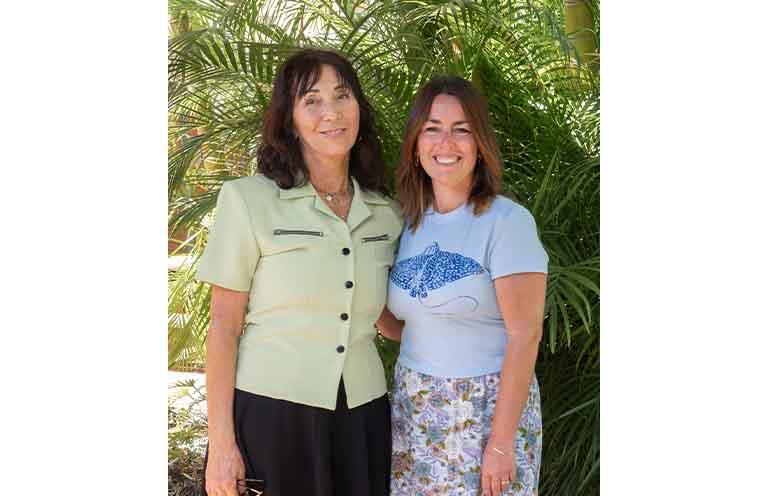
TEN students have taken the first step towards careers supporting people experiencing mental health and other personal challenges after graduating from TAFE NSW’s Diploma of Counselling in Port Macquarie.
Their entry into counselling comes at a time when demand for mental health support is rising.

More than one in five Australians aged 16 to 85 had experienced a mental disorder in the previous 12 months, representing approximately 4.3 million people, according to the Australian Bureau of Statistics’ latest National Study of Mental Health and Wellbeing.
Health Care and Social Assistance is the largest employment sector in the Port Macquarie-Hastings region, employing 9993 people.
With mental health and social support services playing an increasingly important role in regional communities, qualified counsellors are an important part of the local workforce.
Among the latest crop of graduates is Sarah Miles, who runs her own photography and doula business while raising her children.
Returning to study after a lengthy break was a big decision, but one that’s opened up new opportunities.
“I had done a couple of certificates at TAFE NSW in my early 20s, but I hadn’t done proper study since and didn’t know how I was going to go,” Ms Miles said.
“I didn’t know what to expect with online learning, but I found the course to be great and enjoyed all of it.
“My TAFE NSW teacher had a great way of getting so much information across and finding all the relevant things we should know.
“I see there is a need and demand for counselling and social support in regional areas.”
Her teacher, Suzanne Longly, said the qualification combined theoretical knowledge with the practical skills needed to work effectively with people from a range of backgrounds.
“Counselling is a profession where strong theoretical knowledge needs to be matched with practical skills, confidence and the ability to build respectful relationships with people from diverse backgrounds,” Ms Longley said.
“Throughout the course, we give students opportunities to put their learning into practice and develop an understanding of what working with people in real-world settings can look like.”
The Diploma of Counselling is a nationally recognised qualification and is accredited by the Australian Counselling Association.
Graduates may be eligible to apply for Level 1 membership, subject to the association’s requirements.
Ms Miles is preparing to begin training with Lifeline, but eventually hopes to provide counselling support through online and telehealth services.
Lifeline relies on volunteers to provide crisis support to Australians experiencing distress. Trained crisis supporters answer calls, texts and online chats, offering a compassionate and non-judgemental listening service.
Previous counselling qualifications are not required to become a Lifeline crisis supporter, with the organisation providing training, supervision and ongoing support.
Phone crisis supporters undertake an extensive training program involving online learning, workshops and supervised shifts. Volunteers are generally asked to commit to around four hours per fortnight.
For Ms Miles, volunteering will provide another opportunity to put her growing knowledge and passion for supporting others into practice.
Anyone interested in volunteering with Lifeline can find out more about crisis supporter opportunities at www.lifeline.org.au/get-involved/volunteer.
By Rachael THORPE