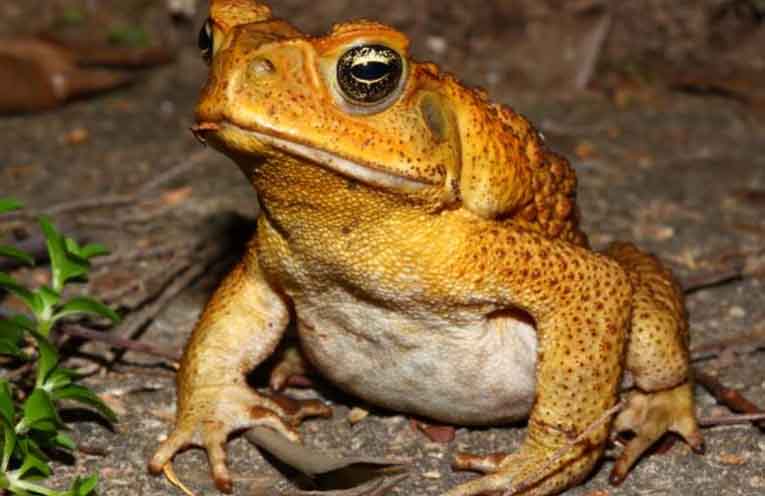
PORT Macquarie-Hastings residents are being urged to remain alert for cane toads after a live animal was confirmed at Lakewood, southwest of Port Macquarie.
The NSW Department of Primary Industries and Regional Development (DPIRD) received a report from a member of the public on 27 August, with photographs provided allowing officers to confirm the animal was a cane toad.

A NSW DPIRD spokesperson said approximately 98 per cent of NSW remained cane toad free and the invasive species had not established in the Port Macquarie area.
“Cane toads are notorious stowaways, allowing the species to travel long distances on vehicles, in freight and materials from cane toad impacted areas to other parts of the state,” the spokesperson said.
Following the Lakewood detection, DPIRD has engaged with the local community through a social media alert and arranged a letterbox drop encouraging residents to watch for and report further sightings.
“The public is an integral part of reporting unusual animal detections and DPIRD appreciates the support of the NSW community in reporting things like the cane toad in Port Macquarie,” the spokesperson said.
“If members of the public believe they’ve detected a cane toad they should catch it without harming it and report it with a photo via ToadScan.”
DPIRD will contact people making reports to provide further assistance.
Residents are also being encouraged to watch for cane toads potentially arriving as stowaways in luggage, camping equipment, caravans, vehicles, trailers and boats.
Green waste, mulch, garden and building materials, equipment and freight can also provide opportunities for the pest to travel from cane toad-affected areas.
The cane toad is listed as an extreme threat by the National Environment and Invasives Committee.
Despite being a tropical species, cane toads are capable of establishing self-sustaining populations as far south as Sydney, making early detection important to their management in NSW.
The pest can affect native animals through predation and competition for resources, while toxins excreted through glands above a cane toad’s shoulders can poison native fauna, pets and other animals.
Residents who suspect they have found a cane toad are encouraged to photograph and report the animal through ToadScan.
By Sis HIGGINS